
Among the less critical points we factored into consideration is the adjustment of the side extensions. While the locking mechanisms really factored into the stability of each table saw, the adjustments themselves are more an ease of use kind of feature. Ideally, the extension will slide smoothly in and out and lock into place without play.
The Database Enhancement Gateway provided the “Who Pays?” study examples of both CCC and Audatex confirming pinchweld clamp repair was not included.
As in the "what they do" section above, these aren’t purely volume-reduction devices, although they can help contribute to such solutions when used carefully, and without lofty expectations. They don’t dramatically decrease the overall ambient stage volume (since the volume is still there, it is just being blocked and deflected), and they can sometimes create odd and undesirable reflected sounds from the amp-side of the shield.
The brake arms are cold-forged from 6061-T6 aluminum, a process that Box claims results in a stiffer and lighter component that has more durability than a piece that has been cnc machined. To put this in perspective, TRP’s largely successful CX9 and CX8.4 brakes are also forged, but feature cnc machining throughout. The Eclipse’s two brake arms show no signs of machining, giving them a smooth and rounded appearance. The laser-etched graphics are a nice touch as well, and are likely to remain fresh for many seasons.
Subscribe to our newsletter. Find all the best offers at our Coupons page. Disclosure: This post is brought to you by the Insider Picks team. We highlight products and services you might find interesting. If you buy them, we get a small share of the revenue from the sale from our commerce partners. We frequently receive products free of charge from manufacturers to test. This does not drive our decision as to whether or not a product is featured or recommended. We operate independently from our advertising sales team. We welcome your feedback. Email us at insiderpicks@businessinsider.com.
I’ve had everything but the calipers replaced. The Jeep even has a new master cylinder. I later went with a brake upgrade featuring larger rotors and braided stainless steel lines. The lines were my idea. I’ve put more than 250,000 miles on motorcycles. Braided stainless steel lines are always the first thing I change on a bike to eliminate hose expansion. The Jeep still has a spongy brake pedal. In all of the columns I’ve read in Jp regarding this specific year and model JK Unlimited Rubicon, I’ve never seen any mention of this problem with your project vehicles. Most that I’ve talked to say it’s normal for this year Wrangler, even the local dealer.
As for your CJ, the T-18 is the best manual transmission ever offered in the ’76-’86 CJ model. It’s a heavy-duty truck transmission. Of course, it’s not particularly fast shifting, but it’s incredibly durable, especially when put into a small Jeep. Versions of the T-18 transmission can be found in V-8 powered 1-ton trucks of the same era, so you know it’s overkill in a CJ. Most ’72-’75 CJ T-18 transmissions feature the slightly less desirable 4.02:1 ratio First gear and a front cast-iron adapter plate that mates to the AMC bellhousing. The ’76 model was a crossover year for the Jeep CJ T-18, so your Jeep could have the T-18 with either the 4.02:1 or the more desirable 6.32:1 First gear and no front adapter. All ’77-’79 Jeep CJs with the T-18 came with the wide-ratio version that features the 6.32:1 ratio First gear. No front adapter plate is present on these models. The 13-01-097-901 casting stamp on your T-18 transmission indicates that it originated in a ’76-’78 CJ. It could have the 4.02:1 or the 6.32:1 First gear. Ultimately, if your First gear is already plenty low for the type of off-roading you do, then there is no need make a change. There is absolutely nothing wrong with the T-18 with the 4.02:1 ratio First gear. It’s only undesirable if you need more low-range gearing off-road.
The Kobalt 80V Max chainsaw—twin brother of the Greenworks 80V model—also had a hard time moving away from the bottom of the pack in each of our tests.
When a JK is lifted with the stock-length control arms, the front axle moves rearward and the steering caster decreases. This causes a slightly rougher ride and poor handling. Most suspension lift companies offer longer lower control arms to correct the caster, but this does little to combat the slightly rougher ride caused by the control arms located at more of an angle. Most of the suspension lift kits from AEV (aev-conversions.com) are bracket lifts. Rather than replace the factory control arms with longer adjustable arms, the control arm mounting points are relocated lower on the frame with drop brackets and the factory control arms are retained. This design has several benefits. The drop brackets correct the caster, retain the factory ride, and reuse many of the OE suspension components. The only real disadvantage is the loss of ground clearance under the lower control arms and their mounts. If you don’t plan on extreme wheeling over rocks and logs, the bracket-style lift is a great way to go. So for a daily driver where ground clearance is less of a concern, this is probably one of the best lift kit options.
I’ve gained a few airline miles over the past month. In March I flew to Stuttgart to attend the TRUMPF Intech event, visiting an area fab shop on the way; and in early April I flew to St. Louis for NASCC: The Steel Conference, hosted by the American Institute of Steel Construction. In many respects the two events are at opposite ends of the metal fabrication world. Intech focuses on precision sheet metal fabrication; NASCC (formerly known as the North American Steel Construction Conference) focuses on commercial construction and the detailing, structural fabrication, and erection that goes with it. Both events, however, shared a common theme: The role of data in metal fabrication will become more important than ever.
Do you have any ideas on what the root of the problem may be? I never experienced any vehicle with this problem that couldn’t be fixed in all the years I worked as a mechanic, and I did an extensive amount of brake work.
Coolest detail: Built-in, two-cent rebate. When Jeremy Sycip started building frames with a wishbone design around 1994, he increased the seatstay diameter to 19mm to improve braking performance. In doing so, the stays needed a cap, so Sycip made them from sheet metal—a process he eventually found to be time consuming. He then considered having a machine shop make the caps, but found that to be cost prohibitive. That’s when Sycip realized, “A penny was the perfect size [for the caps] and cost only a penny each. So I started using pennies and have been since.”
What a Tesla sees: 360 degree video reveals exactly how Elon Musk’s electric car navigates the world | 48 Box And Pan Brake Related Video:
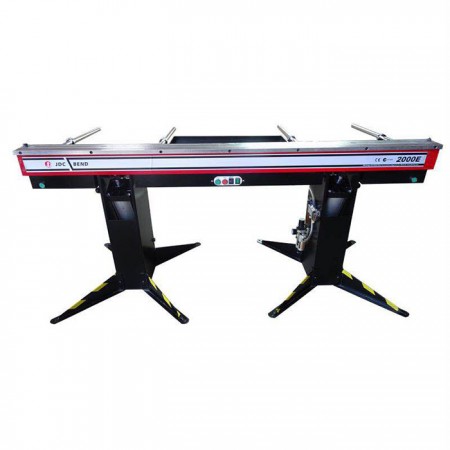
Fast and good quotations, informed advisers to help you choose the correct product that suits all your needs, a short production time, responsible quality control and different services for paying and shipping affairs for Auto Brakes , Press Brake Machine , Brake Sheet Metal , Our products are very popular in the word, like South American, Africa, Asia and so on. Companies to "create first-class products" as the goal, and strive to provide customers with high quality products, provide high-quality after-sales service and technical support, and customer mutual benefit, create a better career and future!